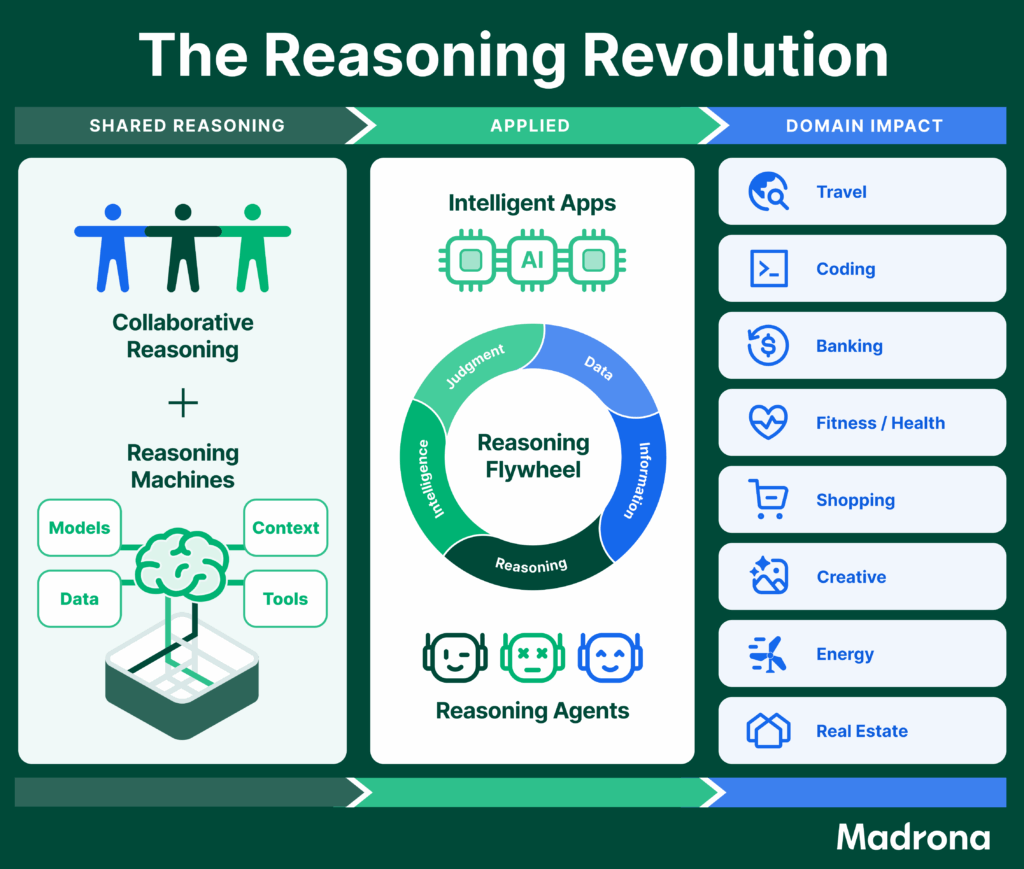
For most of the past three decades, enterprise software has been in the business of telling people what happened. Systems of record captured the transactions, analytics tools turned them into reports, and machine learning eventually got quite good at predicting what would come next. The decision itself, though, has stayed where it always was, with people working through spreadsheets and hard-won experience, and what they learn from one decision seldom carries into the next. What is new with AI is that software can finally take part in that work. It can reason through a decision alongside the people who own it, act on it and learn from how it turns out, so that each decision makes the next one better. We call that compounding loop the Reasoning Flywheel, and we believe the companies that get one turning inside their operations will steadily pull away from those that don’t.
Few corners of the economy need that flywheel more than the companies that make and move physical goods. Forecasting tools have improved steadily for years, yet planning teams at most consumer brands and retailers still run their most consequential decisions through legacy software, sprawling spreadsheets and the heroics of a few people who know where everything lives. The forecast was never really the bottleneck. The hard part is translating a team’s judgment about suppliers, margins and service levels into the hundreds of purchasing and production decisions the business makes every day. Legacy planning software stops at a recommendation and leaves that last step to people, which means the judgment never compounds. It gets reapplied by hand, order by order, and it walks out the door when someone leaves.
Atomic is building what it calls an AI control system for physical goods companies, and we think of it as a Reasoning Flywheel for the physical economy. It gives planning teams a model of their business at the product level and recommendations that show their reasoning. When a team improves the logic behind a decision, Atomic carries that improvement into every order the business places, and as trust builds, AI agents take on more of the work. That is what executable judgment looks like, and it is why we are doubling down.
Today Atomic announced a $12.5 million Series A co-led by Klass Capital and Madrona. We backed the company at the seed, and are excited to double down on their incredible mission.
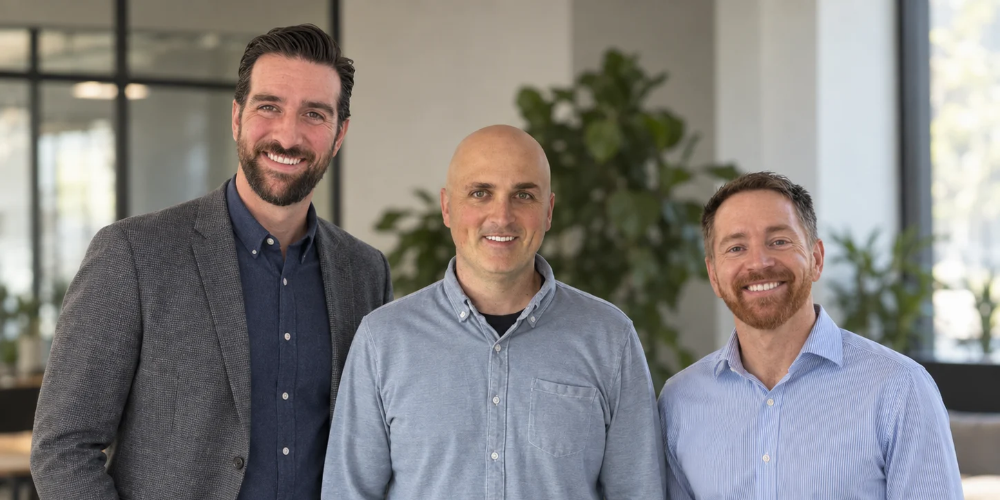
The founders are the reason we were confident so early. Michael Rossiter, Neal Suidan and Jeff Goodrich led sales and operations planning at Tesla through the Model 3 ramp, when the business needed to scale 20x. Tesla had to take a mass-market car from launch to volume faster than traditional supply chain software was designed to support. To get through it, the team built a 50-person planning engineering organization that treated planning as a system to be engineered rather than a report to be reviewed. Jon McNeill, then Tesla’s president, worked alongside them through that period, and when they set out to build something of their own, DVx incubated it.
We rarely see founder-market fit this literal. Most companies contending with volatile demand and tight supply will never be able to justify the kind of team Michael, Neal and Jeff built at Tesla, and until recently no software could stand in for one. AI changes that equation. Models can now reason across the messy, product-level data a planning team lives in, planners can work with AI to write new decision logic in a fraction of the time it used to take, and agents can handle work like S&OP preparation, inventory questions and supply-risk checks. Atomic turns what the founders learned on one of the hardest versions of this problem into a product a physical goods company can deploy in about 30 days, using the data it already has and running alongside its existing ERP.
The early results show what happens once that loop kicks in. At DoorDash’s DashMart business, Atomic now automates 90% of purchasing across hundreds of sites, following a migration from a legacy vendor that took about three months. More telling is what the DashMart team did next. Using Atomic’s AI, they built new logic for how primary and backup suppliers should be used in roughly an hour, and Atomic applied it across daily purchases, shifting more volume to primary suppliers and improving gross margins. That hour is the flywheel in miniature: a team’s judgment captured once, carried into every order, and transparent enough that the people responsible for the outcome can trust it.
With this round, Atomic will extend its platform from planning and decision support into a full control system, one that connects a company’s business objectives to the decisions it makes every day, and will support larger enterprise deployments. Volatile demand, supply shocks and thinner margins are turning planning into a competitive discipline for every company that makes or moves physical goods, and the companies that come out ahead will be the ones whose best judgment reaches every decision. Michael, Neal and Jeff are building that capability for everyone who could never build it themselves, and we’re rolling up our sleeves alongside them.