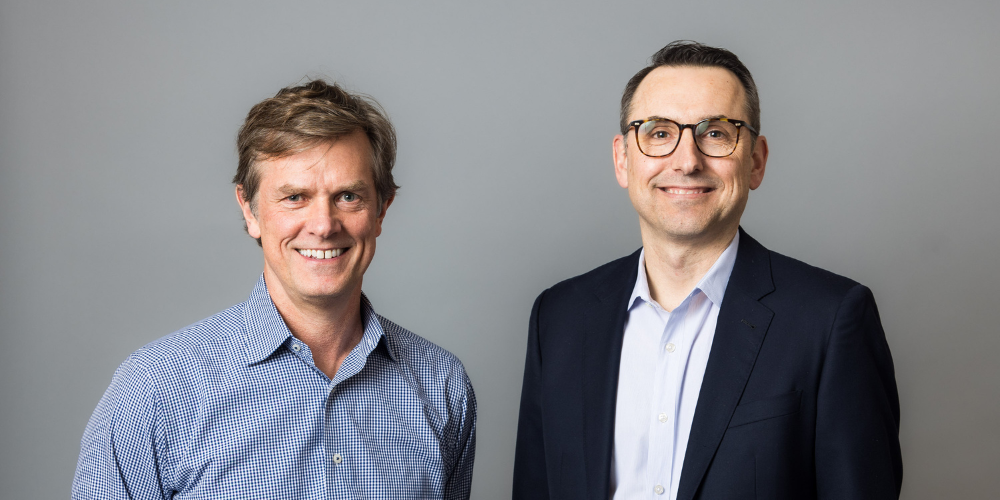
Today we are thrilled to share that Echodyne has entered into a definitive agreement to be acquired by Shield in a transaction valued at $5.3 billion. We believe it is the second-largest acquisition of a private venture-backed company in Washington state history*. For Echodyne, it is a milestone more than 12 years in the making. For Madrona, it is a shining example of the “Day One for the Long Run” philosophy that has guided us for over three decades.
We have had the immense privilege of working with Echodyne co-Founder and CEO, Eben Frankenberg, since before the company was formed, and have been delighted to see how the company has grown into the industry-leading radar company for counter-drone and security systems, with radars built into hundreds of systems used by defense, government and commercial customers in more than 40 countries. As demand for these systems has surged around the world, Echodyne’s exceptional team and technology have answered the call, scaling its manufacturing (all of which is based in Western Washington) to a capacity of 30,000 radars a year and growing the team to hundreds of employees.
Shield is a leading private, global defense technology company delivering a diversified set of intelligent, autonomous hardware and software systems. Together with Shield, we believe Echodyne will be able to scale faster and farther to continue to supply the world with its industry-leading radar systems. In short, this is a phenomenal development for Echodyne employees, customers and shareholders.
We began working with Eben and co-Founder Tom Driscoll in 2014 while they were incubating the business inside Intellectual Ventures, helping lead the spin-out and formation of the company alongside Gates Ventures, with Vulcan and IQT also participating. This initial round was $15 million at a $24 million pre-money valuation. Madrona invested $5.5 million, and I joined the board.
This investment likely never would have happened without my partner Matt McIlwain. Matt and Eben go all the way back to college at Dartmouth. We had wanted to find a way to work with Eben for a long time, and Echodyne turned out to be the perfect opportunity. Eben was an early executive at Onyx Software, where he worked alongside the future founders of Smartsheet, another of Madrona’s most successful investments. At Intellectual Ventures, he joined as COO but also led the group responsible for spinning out companies across its technology and IP portfolio including companies like: TerraPower, Kymeta, and Evolv. Of all the opportunities that arose, Echodyne was the one he wanted to jump into himself as CEO. We knew right away that Eben was exactly the kind of founder and human being we wanted to back. He is brilliant, strategic, thoughtful, steady, relentless, and operates with complete integrity. He does what he says he is going to do, every time, without flair or pretense. He is the ultimate substance founder.
Tom Driscoll, Eben’s co-Founder, is a true visionary technologist. Echodyne’s roots go back to Professor David Smith of Duke and Sir John Pendry of Imperial College London, often called the fathers of metamaterials. Two decades ago their “invisibility cloak,” straight out of Star Trek, made headlines around the world, and many people believe they will win a Nobel Prize in Physics for their work one day. Tom received his PhD at UC San Diego and did his postdoc with David Smith at Duke. He then moved to Seattle, where he led the team that turned that metamaterials science into companies like Echodyne. His technical vision and engineering prowess have guided the company.
The Vision
The original thesis was that Echodyne could be the intelligent radar platform company for the emerging world of autonomy. They had developed a revolutionary metamaterial-based approach to radar technology that allowed significant size, weight, power and cost (SWaP-C) advantages to disrupt existing products and usher in new radar markets (here is a great profile in the New York Times about their approach to metamaterials). Self-driving cars and pilotless drones would all need sensors they could trust. Cameras and LiDAR would play a role, but radar works in any weather, sees over long distances, and is highly accurate. We believed it would be an indispensable part of the autonomy stack.
The problem was that radar had never been cheap, small or light. Most radars were dishes spinning on gimbals under a radome, like the ones you see on boats. Electronically steered radars with no moving parts existed, but they were very expensive and hard to build. They lived in places like the nose cones of fighter jets and cost millions of dollars. Echodyne set out to use metamaterials to build radars with no moving parts and remarkable accuracy at significant range, for ~$100K or less. They did exactly that.
Directionally Right, Specifically Wrong
The market did not unfold quite the way we expected. The first use case Echodyne was excited about was onboard UAVs, imagining fleets of delivery drones flying packages around the world. That hasn’t quite happened yet. Self-driving cars then looked like the biggest opportunity, but they have taken longer to scale as well.
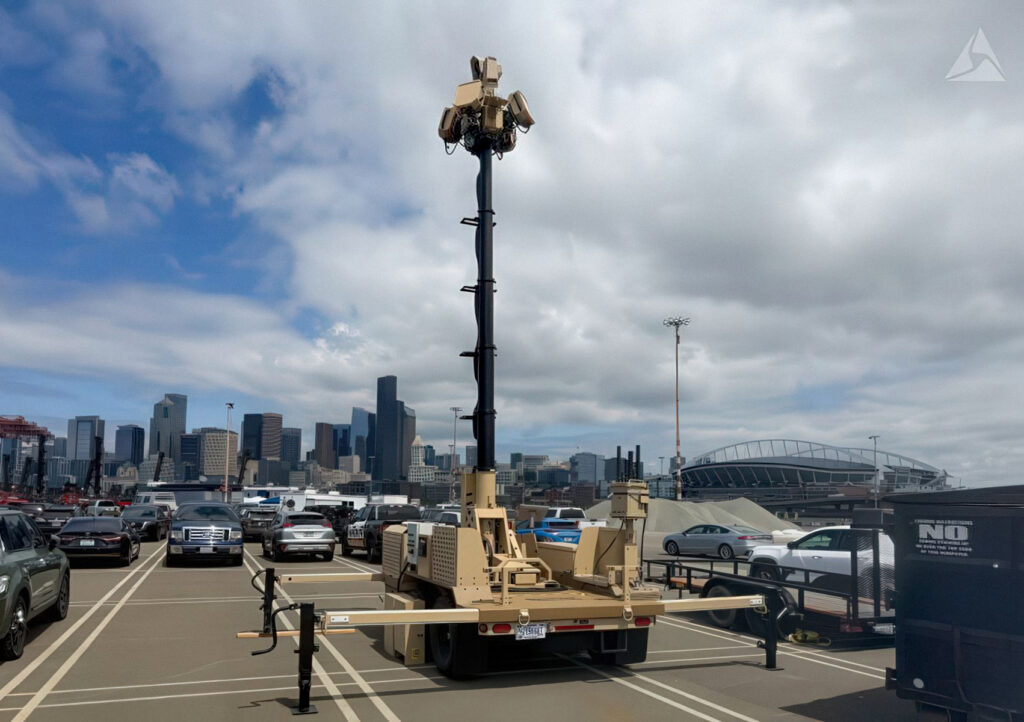
But drones did arrive, and in more ways than anyone envisioned. They showed up as weapons on battlefields, over stadiums, near borders, over prison walls, around data centers, and in the hands of hobbyists and paparazzi. Echodyne’s innovative metamaterials electronically scanned array (MESA) technology gave it the best sensor in the world for finding and tracking drones from close range out to several kilometers for small drones and beyond 10 kilometers for larger UAVs. Its radars are small enough to carry in a backpack or mount on a pickup truck, and scan electronically up and down and side to side. It was exactly what the market needed. Today Echodyne radars are everywhere, from helping keep troops and bases safe on foreign soil, to monitoring airspace for 911 responders, to providing real-time drone detection at U.S. stadiums during last summer’s FIFA World Cup. In September, Echodyne received a contract for up to $250 million from the Joint Interagency Task Force 401 to supply counter-drone radar to U.S. and allied forces.
We have a saying at Madrona when we make a new investment: we hope to be directionally right, even if perhaps specifically wrong. Echodyne fits this perfectly. We believed in Eben and Tom’s vision that they would build a disruptive and highly valuable technology, and even though the market evolved in unexpected ways, with their team they accomplished exactly what they set out to do.
Built the Hard Way
Echodyne solved a very difficult combination of hardware and software problems, built multiple revolutionary radars to address a diverse set of market use cases, and now manufactures its radars at scale.
These achievements required an extraordinary team: a core group of radar scientists and engineers, a manufacturing team that has scaled production, a test team that built the precision equipment to calibrate every radar, and a go-to-market organization led by CRO Todd Fraser whose team works with customers and partners around the world. Huge and heartfelt congratulations and thank you to everyone on the team, with special gratitude to the incredible executive team working with Eben, Tom and Todd: CFO Paul Farmer, VP Manufacturing and Operations Ken Bean, VP Engineering Leo Del Castillo, VP Product Management Jill Hostetter, long-time VP HR Maria Mattson, VP Marketing Leo McCloskey, VP Software Bhushan Kanal, VP Legal Hanna Cox, and the technical wizards led by John Hunt, Nathan Landy and Robert Worl – as well as the many more that I wish I could name here.
There was a time in Echodyne’s history when it was not obvious the company was going to take off. The company invested significant time and money in EchoDrive, for an autonomous car market that didn’t quite arrive. Complex, deep technology products like this can take a long time to build, and we endured our share of product delays, solving thorny problems in the early days. Eben and the team never lost conviction in what they were building, and the market ultimately rewarded them. They were backed by an extremely patient and cohesive group of investors. Working with world-class investors and board members Greg Papadopoulos of NEA, Moe Kermani of Vanedge Capital and Kyle Zabel of Gates Frontier has been a professional highlight for me. Each investor showed conviction and support at critical junctures, from early financings to today.
In my recent Highspot post, I wrote that our earliest board meetings happened over lattes at Uptown Espresso. With Echodyne, Eben and I have had a standing 7am coffee every two weeks at Zoka for more than 10 years. We didn’t make every one. Travel and conflicts got in the way plenty of times, but we consistently met far more often than we didn’t. Those conversations kept me close to the business, gave me a chance to help where I could, and built a deep partnership between Eben and me, and between the board and the company. These early-morning coffees will be one of my most enduring memories from the last 12 years.
The combination with Shield
Shield has agreed to acquire Echodyne in a transaction valued at $5.3 billion, including Shield stock and a substantial amount of cash. Shield is raising $2.5 billion to support the acquisition, and Echodyne shareholders will be joining an impressive group of Shield investors including Blackstone, Advent International, JPMorgan’s Security and Resiliency Initiative, Disruptive, Innovation X Capital, Apandion, a16z, Point72, and many others. The transaction is expected to close in early 2027, subject to regulatory approvals.
The strategic fit is extremely compelling. Shield is building a new-generation defense technology company around three fast-growing business units:
• Autonomous Systems: includes (i) V-BAT, an in-market vertical take-off aircraft for reconnaissance and targeting; and (ii) X-BAT, an ambitious under-development autonomous fighter jet
• Autonomy Software: includes (i) Hivemind AI pilot and mission autonomy software and (ii) synthetic reality and simulation (Aechelon)
• Mission Systems: Echodyne will anchor this unit alongside their existing Vision Systems product line
Shield and Echodyne share a simple belief: autonomous systems can only act on what they can sense, and superior sensors lead to superior systems and outcomes. Post-closing, Eben will continue to lead Echodyne, reporting to Shield CEO Gary Steele. Echodyne will keep selling its radars as standalone products to customers and to the hundreds of companies that build them into their systems.
In many ways, this combination brings Echodyne full circle. When we invested, the vision was that Echodyne could be the radar platform for the autonomous economy. The market developed in unanticipated ways. Counter-drone became the first big opportunity, and Echodyne was ready to meet the moment. Now Echodyne joins a company whose mission is protecting service members and civilians with intelligent systems. Shield expects autonomous aircraft to need more capable onboard sensors in the coming years, and Echodyne’s radar is built for that use. The combination will also accelerate and expand Echodyne’s existing markets and offerings. Joining Shield gives Echodyne the scale to reach far more customers, as part of one of the most ambitious autonomy companies in the world.
We at Madrona are very excited about what comes next. Echodyne’s technology already helps keep people safe around the world. Now, as part of a much broader platform, Echodyne can keep innovating and accelerate sales to customers everywhere. It is also terrific to see Shield continuing to invest in the Seattle region. Shield recently named Washington as the production home for X-BAT, its autonomous fighter jet, and Echodyne will continue to build all its radars at its Kirkland facility. It is another example of innovative defense tech companies being built and growing rapidly here in the Pacific Northwest. We are tremendously bullish on Shield’s future and its diversified set of autonomy and AI-driven defense businesses, and we are proud that Echodyne will be a strong pillar of that company.
For more than 12 years, Eben and the team worked tirelessly to build an incredibly impactful company at scale. They never called attention to themselves. They rarely, if ever, showed up on lists of the hottest defense tech companies, and they were never media darlings. But to their most demanding customers, in governments, municipalities and companies around the world, Echodyne has been a household name. They did everything the right way, the whole way, and – appropriately enough – they are under the radar no longer. It is deeply satisfying to see Eben and the team get here, and with Shield, their biggest days are still ahead.
Day One for the Long Run
Madrona feels honored to have been part of this journey since company inception. So many people at Madrona helped along the way, none more than Matt McIlwain, who has been a constant mentor. Our GC, Joanna Black, helped guide us through a complicated transaction; our COO, Troy Cichos, is always a trusted thought partner; and Matt Witt on our talent team helped recruit key leaders. Win or lose, everything at Madrona is a team effort, guided by our North Star of helping founders succeed.
The best part of venture capital is the chance to work with brilliant, committed people as they build something important. Echodyne has been that in every way. This is what Day One for the Long Run feels like. Congratulations and thank you to Eben, Tom and the entire Echodyne team. Onward and upward!
The largest being Okta’s acquisition of Auth0 for $6.5 billion, announced in March 2021.
Related Insights