
What was the problem that inspired the creation of Axiom, and why were you the right person to tackle that?
I have been struck by the abstract beauty of mathematics since I was a child. I loved solving problems fast and then being able to move on to the next one. It was almost like a video game loop.
During my freshman year at MIT, when I was 18 years old, a friend said that he and a group of people were going to codify the entire math undergraduate textbook using something called Lean, which is a programming language. That really got my attention! Lean became a huge passion for me, and it helped plant the seed for starting Axiom.
Fast forward 3 years to when I met Shubho Sengupta, who was AI research director at Facebook at the time. He was telling me about the last slide for a presentation he gave across the org, which said, “Math is code and code is math.” That really interested me. Yes, math is code because of Lean turning proofs into a computer program. And code is math. It’s basically the philosophy that the bottleneck to infinite AI generating and deploying software at scale is verification, or verified generation.
Then, that summer I was in Professor Ken Ono’s research program (REU), and the next summer I met Evan Chen, who was the math coach for the United States IMO team. As I continued through my schooling, I was meeting so many people and realizing that there was this new group of mathematicians, young people, brilliant rising stars across domains who were starting to embrace Lean and AI. It felt like AI for math was coming and was going to be the future.
Finally, while I was at the Knight-Hennessy Scholar Program at Stanford, Julie Zhuo, who was the first intern at Facebook who went on to become the VP of Product Design, came and gave a talk. Afterward, I was telling her that I had this pretty interesting idea, and I wondered if I should do something about it. She asked me, “can your energy lead you to do anything else?” And I realized the answer was no, so I might as well just surrender to it.
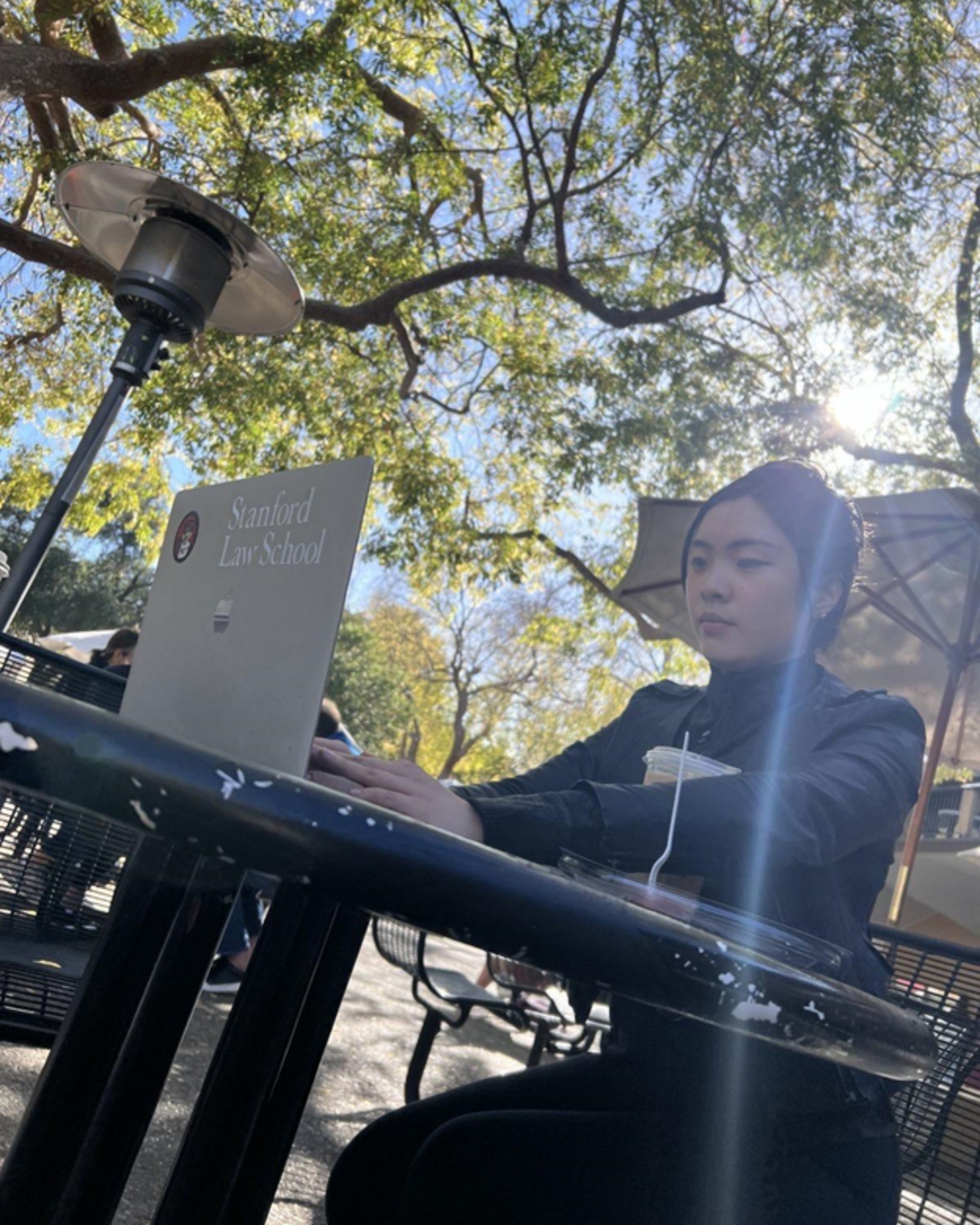
Shubho and I started going to the Matcha Café on University Avenue to just chat. It wasn’t clear that this was going to go anywhere — we were just two very excited people. I still remember my first pitch to an investor. I decided to wear this black leather jacket like Jensen Huang, and my friend actually took a picture of me sitting under a tree reading my pitch deck and me in that black leather jacket with a braided ponytail. It was really the beginning of everything.
Now, Axiom is building AI systems trained on formal math proofs to create machines that can reason with provable correctness, starting with an “AI mathematician” and expanding to scientific and engineering problems. As a five-month-old startup, our product, AxiomProver, achieved a perfect score on the 2025 Putnam problems. A perfect Putnam score has been achieved by very few human mathematicians and never by an AI mathematician.
What is it like to work with Madrona?
Jon Turow [Madrona Venture Partner] actually wrote me an email late in our fundraise process, and my initial reaction was “Wow, that is a really smart email.” He talked about his understanding of the space, his connection to Leonardo de Moura, the founder of Lean, and he offered to connect me to some amazing people, including professors in the CS Department at Stanford. I thought, “Wow, he seems like an interesting person who I would love to meet.”
That summer, I went to Seattle multiple times and met with both Matt and Soma and we talked about all the things that were going on — about company building, team building, and other more philosophical parts of life. They are really keen on understanding what your problems are and helping you solve the near-term problems together, while also giving you the sort of contagious optimism of the global outlook. Every time I walked away, I felt like I learned not just company-building lessons, but also life lessons from the amazing Madrona team.
Madrona folks are extremely sharp. They are intellectually exciting to talk to, especially Matt and Jon. We like to nerd out about things related to formal verification. Madrona also has a lot of great connections with industry leaders like AWS and Microsoft, and they know how industry practitioners think about this space, which is incredibly useful insight for Axiom.
Sometimes in company building, you need an external pair of eyes to tell you that something is not sustainable and maybe you need to change your perspective.
Tell us about a Madrona Moment.
I was in Las Vegas for an event Jon invited me to. It was my first time ever visiting Vegas, and I thought I should do the iconic thing and dress up. I wore these really high heels, but the thing I didn’t know was that all the hotels are connected and there’s a lot of walking. This was also F1 racing weekend, so all the roads were closed. You could not go anywhere unless you walked. While we were walking, my one of my heels broke, and Jon actually took me to a store to find a pair of shoes so I could survive the day because there were a number of meetings. That was THE Madrona moment. I realized these folks really cared about me as a company founder, but also as a person and friend.
There is a broader metaphor to this. I was actually insisting on not getting a new pair of shoes because I thought I could do it. Founders have this sort of pain and suffering mindset, and I thought the heels were pretty and didn’t want to throw them away. Mind you, they were already broken at that point, but I thought I could fix them. Sometimes in company building, too, you need an external pair of eyes to tell you that something is not sustainable and maybe you need to change your perspective.
What have you learned about yourself during this startup building process?
The thing I learned about myself is this idea I call bounded attention versus free attention. Let’s say I execute a lot of tasks that are somehow defined and a bit constrained. I’m really good at doing a lot of them — a bit like in math you have the brute-force type of problems. You just keep checking one casework after another. What I didn’t realize was that, while I can do it well, it’s not my differentiator. I think my differentiator comes from free attention time where I can be creative, I can be strategic, I can read something for long periods of time without acting on it. And then eventually that understanding turns into on-point execution or strategy for others to execute.
So, I learned that sometimes following the things that you know you’re supposed to do, or telling yourself that you can power through things, that isn’t necessarily the best way to spend 100% of my time. I think most founders are not that different when it comes to their bounded attention. It is the free attention that can set one company apart from another.
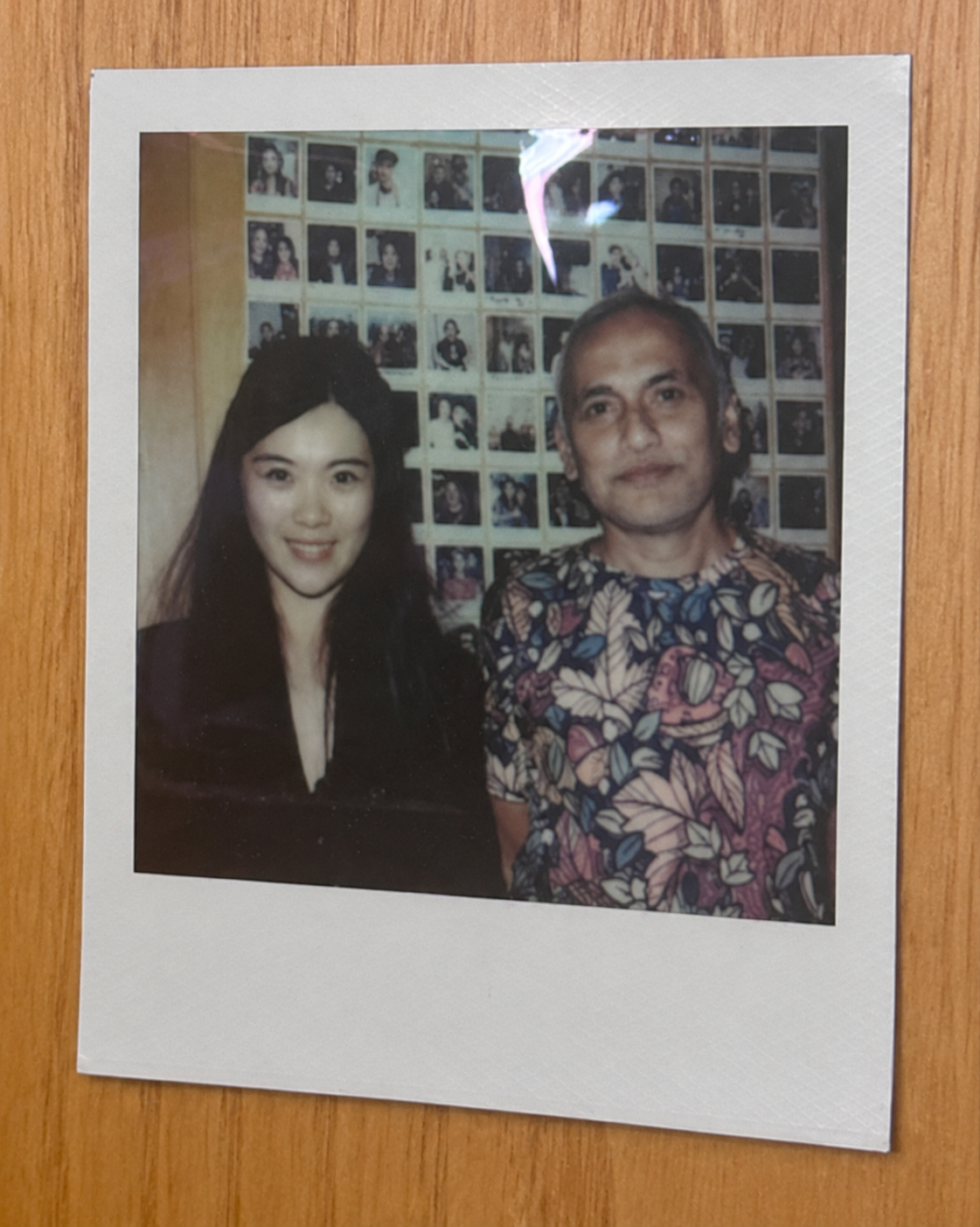
Something else I’ve learned is that I really enjoy working with every single person in the office. Everyone talks about culture being important. I think culture brings joy, and working with Shubho is one of the best things that happened in my life. It’s a really great partnership. I came from math where a lot of these things are pretty independent, right? Even if you’re collaborating with someone, you generally do independent contractor type of work. I didn’t realize that building with people, the early founding members, that that sort of camaraderie is something that would make me perform so much better.
What is the most important lesson you have learned during your startup journey?
It’s such a cliché saying, but build for the long term! Do not lose focus on the short-term. That’s difficult for startups because you’re so resource constrained. When we started off, the other competitors — both startups and hyperscalers — existed years before we launched. They had raised so much more capital and had a much larger workforce. And on our first day at the office, we had camping chairs and plastic folding tables, and we didn’t get the door lock working for three whole months.
It is difficult to balance the short-term and long-term trade-offs sometimes, but we tend to design for long term and do the moonshot, ambitious, hard thing, which hopefully shows up when people say that Axiom has really good research taste and a good comprehensive vision that feels grand.