There are moments in early-stage investing when you encounter a team and think: these people see something that most people don’t yet see. Not just a product opportunity, but a genuinely different future — one where the relationship between humans and technology is fundamentally reimagined. The Vercept founding team was exactly that.
Today, we’re proud to share that Vercept is being acquired by Anthropic.
Vercept’s initial, full-time founders, Kiana Ehsani, Matt Deitke, Ross Girshick, and Luca Weihs started the company with a simple but deeply considered conviction: the nature of human-computer interaction will change when AI agents can “see” and engage with every application. Their product, Vy, uses computer vision to interpret screens the way a human does, letting users leverage their machines in natural language, visually automate complex workflows, and move through their digital lives without the friction of APIs, connectors, or hardcoded steps. Intelligence that sees what you see, understands what you want, and takes action on your behalf.
That vision required extraordinary technical depth to execute. This is a founding team with few peers. Kiana earned her Ph.D. in computer vision and embodied intelligence, then spent nearly a decade at the Allen Institute for AI pushing the frontier of how AI agents perceive and navigate physical and digital environments. Ross Girshick is a true pioneer. His work combining deep learning and computer vision helped lay the scientific foundation that much of modern AI is built upon. Matt Deitke led some of the most influential AI research projects to emerge from Ai2, including Molmo, Objaverse, and ProcTHOR. Luca Weihs brought the rigor of AI agent infrastructure and reinforcement learning to the team’s architecture. They also benefited from Oren Etzioni’s support, who offered the rare combination of scientific credibility and builder’s instinct from founding several successful startups.
But technical depth alone doesn’t build a company and team worthy of being acquired by one of the leading frontier model companies. And this is where Vercept connected to something larger.
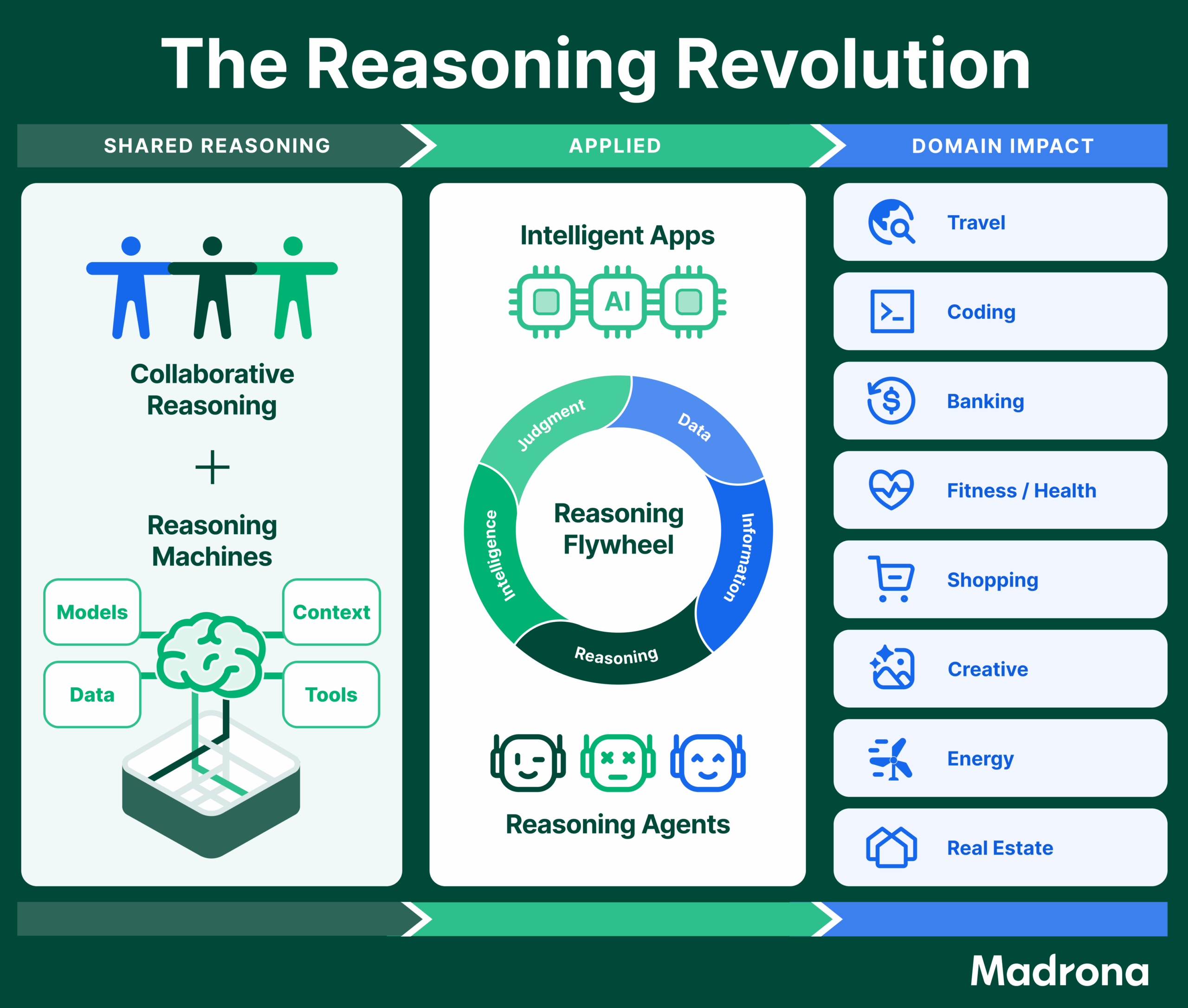
We are in the midst of what Madrona has been calling the Reasoning Revolution — a highly consequential shift, where AI stops being a tool you query and becomes a reasoning partner embedded in the flow of work and life. The defining question of this era isn’t “what can the model do?” It’s “how do humans and AI systems reason together to produce better outcomes?” Vercept provided a direct and serious answer to that question. Computers use agents that understand your screen, your context, and your intent aren’t just automation. They are the interface layer of the reasoning era. Every workflow Vy handled was a small proof point that human intent and machine intelligence could be made to work in genuine concert.
What set Vercept apart, though, was that this team never lost sight of the human on the other side of the screen. Their ambition wasn’t to show what AI could do in a benchmark — it was to radically reduce the effort it takes for real people to benefit from AI in their daily lives. From individuals using Vy to control their computers by voice, to students automating homework tasks, to businesses eliminating repetitive workflows, the product found users precisely because the team thought hard about usefulness, not just capability.
We are also proud to congratulate the AI2 Incubator, which believed in this team from the very beginning as their first institutional investor. Their partnership with Vercept is a testament to what great early backing looks like.
There is something worth pausing on in the nature of early-stage company building that this moment brings into relief. Founders at the earliest stages are making a wager not just on a product, but on a vision of the future that is far from being broadly understood. They are choosing to believe, often before the world has given them any reason to, that they see something true. The arc of a company like Vercept — from a handful of researchers asking, “What if computers just understood you?” to an acquisition by one of the world’s most important AI organizations — is what makes this work so remarkable to be part of. That journey from first conviction to realized outcome never gets old.
This news also marks a meaningful milestone for Madrona. In conjunction with this transaction, we become a small investor in Anthropic. That, combined with the recent acquisition of Statsig by OpenAI — where we chose to receive our proceeds entirely in OpenAI stock — means we now find ourselves as investors in both Anthropic and OpenAI.
We didn’t engineer that outcome. It emerged from backing founders whose work was so compelling, so technically serious, and so aligned with the future of AI that the two most consequential frontier AI labs decided they had to bring these teams inside. And that only happens when you make great early bets on the right people.
We are deeply grateful to the founders with whom we get to partner on their entrepreneurial journey. The Reasoning Revolution is both early and accelerating — and the teams defining the path deserve every bit of recognition they receive.
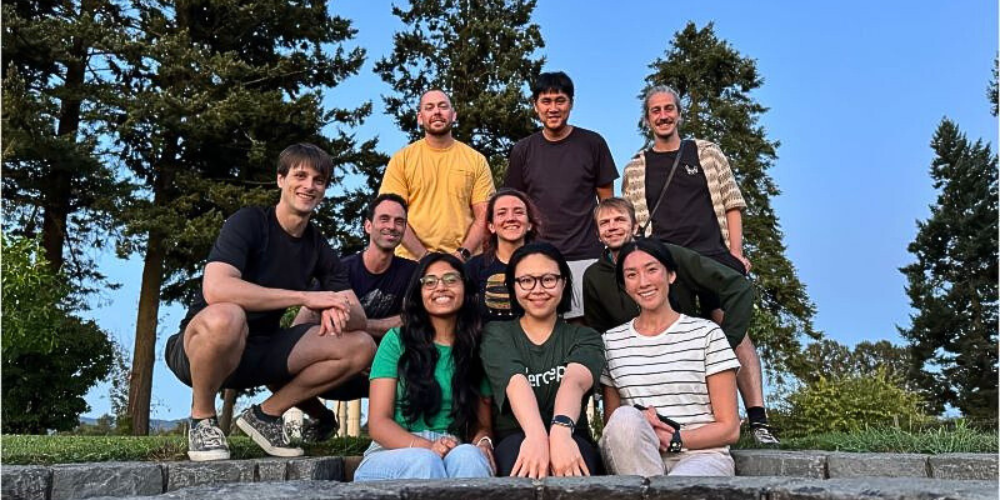
Congratulations to Kiana, Matt, Ross, Luca, Oren and the entire Vercept team.
Related Insights