For America to become a nation of builders in the 21st century, we first need to solve how—and where—to build. There is a common obstacle shared by many of our most important contemporary innovations, and it’s surprisingly pedestrian: land. Specifically identifying optimal sites for some of our most ambitious and strategic national priorities.
AI data centers and the solar and wind farms that power them all need land, and so do the transmission lines that connect them and the housing so many regions can’t build fast enough. Each of those is an enormous trend on its own. More and more often, they’re competing for the same acres that today are used for commercial timber, agriculture, housing, and recreation.
You’d expect the process for deciding what happens to that land to look as modern as the projects themselves, but it mostly doesn’t. Developers still find sites largely by calling around. Owners decide what to do with their property based on a broker’s read and a couple of comparable sales, usually assuming the land will keep doing whatever it does today. Working out whether a parcel has power nearby and a community that won’t fight the project can take months of specialist work, done one parcel and one use at a time. Decisions do not holistically consider economic, financial, commodity market, regulatory, environmental, climate, geographic, biological, political and other longitudinal factors that can affect the value of land over decades. Swap the PDFs for paper and it isn’t that different from how land use was evaluated, and how it changed hands before anyone had heard of a data center, which is a strange state of affairs for an asset class worth more than $5 trillion in the US.
That was workable when land mostly stayed in the same use for generations. Now the pressure is coming from several directions at once, and mistakes are getting expensive. A data center planned for the wrong county can stall for years, and communities are increasingly willing to say no. Earlier this month, voters restricted development or rejected pro-development proposals in 40 of 41 ballot measures across 10 states. On the other side of the table, owners who don’t know what their land could become tend to price it as whatever it is today, which can mean selling too cheaply or saying yes to the wrong project. Some land owners simply want updated analyses each year that might further justify the current use, ( e.g. commercial timber, agriculture, housing, recreation, energy) compounding value over time. In all cases, the neighbors live with the result for a long time.
In a world where residential home owners constantly refer to Zillow or Redfin AI estimates of home value, commercial real estate relies on property data from companies like CoStar, and undeveloped land makes up the vast majority of the country, it is remarkable that a reliable, national source of truth on land data does not exist.
Enter Aarden, who is building this data platform along with the AI tools to make strategic land use plans with modern tools. Today the Seattle company announced an $8M round led by Overture, with Madrona and Propeller participating.
Aarden’s AI powered land intelligence platform helps landowners and investors model and project what a parcel is worth under every use it could support, and it helps developers find workable sites along with the owners who are open to a deal. Underneath, it pulls more than 13 million US parcels into one data layer with over 200 attributes each, from zoning and soil to the distance to the nearest transmission line, and scores every parcel for timber, agriculture, solar, wind, housing, and data center use. Comparisons that used to require a separate consultant for each possible use, and months of waiting, now happen side by side.
It has caught on fast. Within eight weeks of launching this summer, Aarden was working with clients who manage about 14 million acres between them, nearly the size of West Virginia. It has since led analysis on dozens of land deals worth $10M or more, including this year’s largest by acreage.
Part of what convinced us is how Aarden uses AI. It’s easy to simplistically point a frontier model at licensed parcel data and get back a memo that reads beautifully. When Aarden’s team tried that, the memo missed much of what mattered, and the recommendation changed depending on what the model happened to find. So they built something far more precise, where the hard numbers come straight from their database and decision factors are checked against its source before a customer sees it. It’s less flashy than a chatbot, but much more effective. This is why large, compliance-minded institutions trust the output enough to make decisions on it. We suspect a lot of applied AI will end up looking like this in markets where one wrong number can cost millions.
We also like where Aarden is situated among the stakeholders. It works with landowners and developers, so it can see where interest lines up on both sides of a market that has mostly run on phone calls and handshakes, and every deal it works on makes the data under the next one a little better.
Len, Dan Li and Tim from Madrona have known Danan Margason since his days at TUNE here in Seattle. We realized quickly he is the type of dynamic, full-stack, high integrity, low ego founder we LOVE to work with. Danan went on to be a Director of Product at Booking.com and then Chief Product Officer at Carbon Direct.
Growing up in the Northwest and coming from a family of foresters, Danan kept running into people with large landholdings who had no good way to figure out what their land was worth for anything besides what it was already doing: typically timber and agriculture. Aarden came out of those conversations.
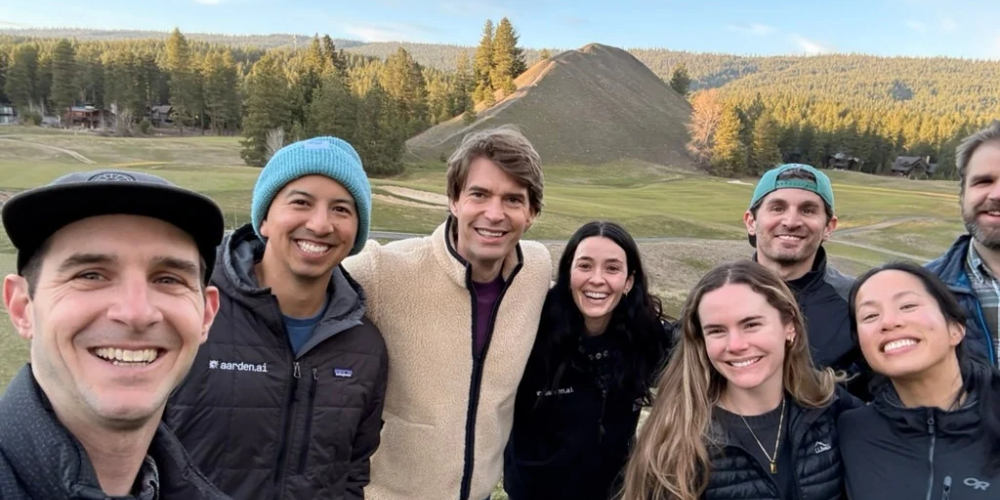
The rest of the early team is equally impressive. Ben Hudson built valuation models on Zillow’s Zestimate team. Mike Gleason led solar and data center modeling for the National Renewable Energy Lab. Jasper Croome scaled products at Amazon and Nike, and Steven Yee did the same at Porch and Convoy. Bella Todaro worked on off-grid solar in Kenya. Julia Jones led design at Omnidian. We’d have had a hard time designing a collective group of individuals better suited to solve this problem.
The new funding will go toward further product innovation that provides real-time monitoring when a parcel’s value changes, like a substation upgrade or a county rezoning, identifying sites that are ready for a developer to move on right away. We think Aarden is poised to become the de facto standard for evaluating these decisions—for owners and developers alike—and are thrilled to work with Danan and the team as it gets there.
Related Insights