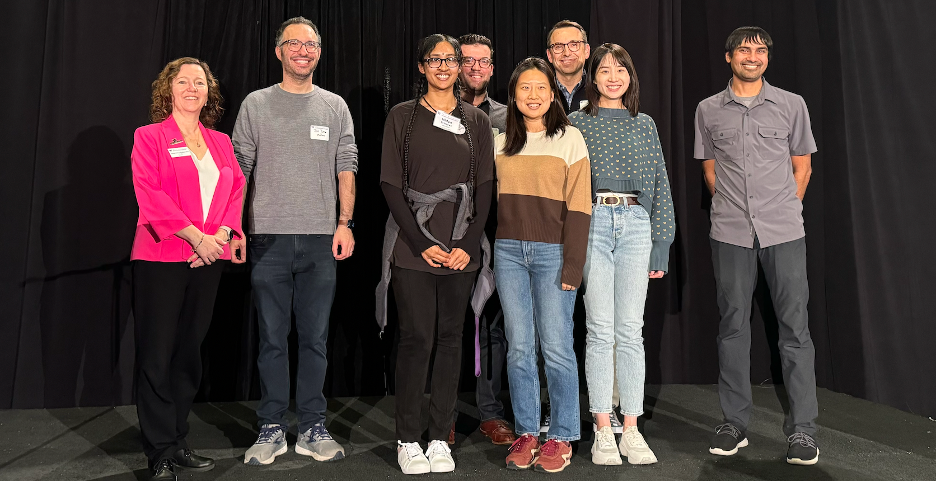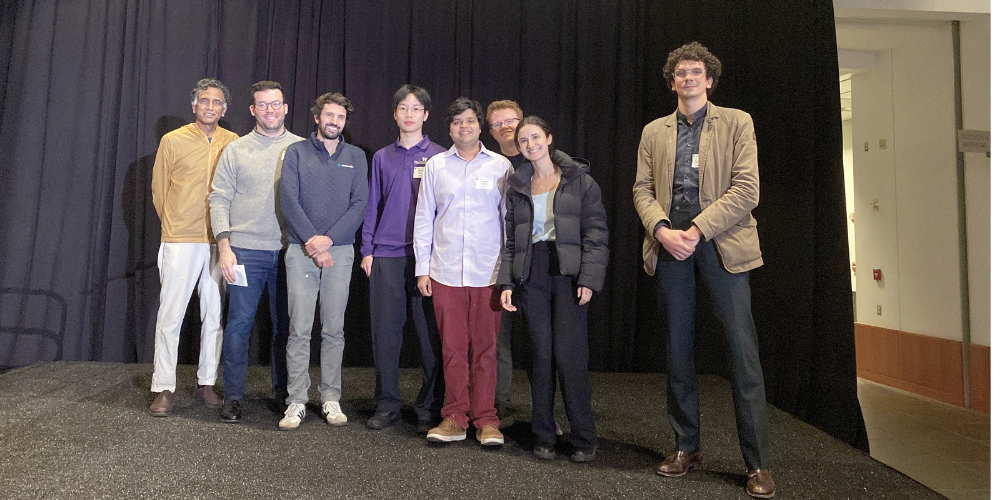
The Allen School at the University of Washington held its annual fall Research Showcase on October 29th, highlighting innovations in computing. Students and faculty from 51 groups presented posters and demos across a wide range of topics, from core advances in AI and systems, data management, graphics and vision, and robotics to AI for health and the environment, as well as security and education in the age of AI.
Madrona has been part of this tradition since 2006, awarding the Madrona Prize to the student project that best pairs exceptional technical work with real commercial promise. The award celebrates Pacific Northwest entrepreneurship, innovation, and our thriving technology community.
This year’s entrants indicate a shift we’re seeing across many important projects and founder pitches: AI and technology are advancing faster than ever, and the frontier is moving from the cloud into the physical world. As it does, the problems researchers are tackling are changing too. As always, the submissions were strong, and the decision was tough!
Winner
This year’s Madrona Prize went to Zhihan Zhang, a PhD student in the Allen School, for “AI Iteratively Optimizing AI via Real Hardware Feedback.” Other collaborators include Alexander Metzger, Jiuyang Lyu, Chun-Cheng Chang, Jiayi Shao, Yujia Liu, Emmanuel Azuh Mensah, Edward Wang, and Gregory D. Abowd, as well as Allen School faculty members Shwetak Patel, Vikram Iyer, Natasha Jaques, and Kurtis Heimerl.
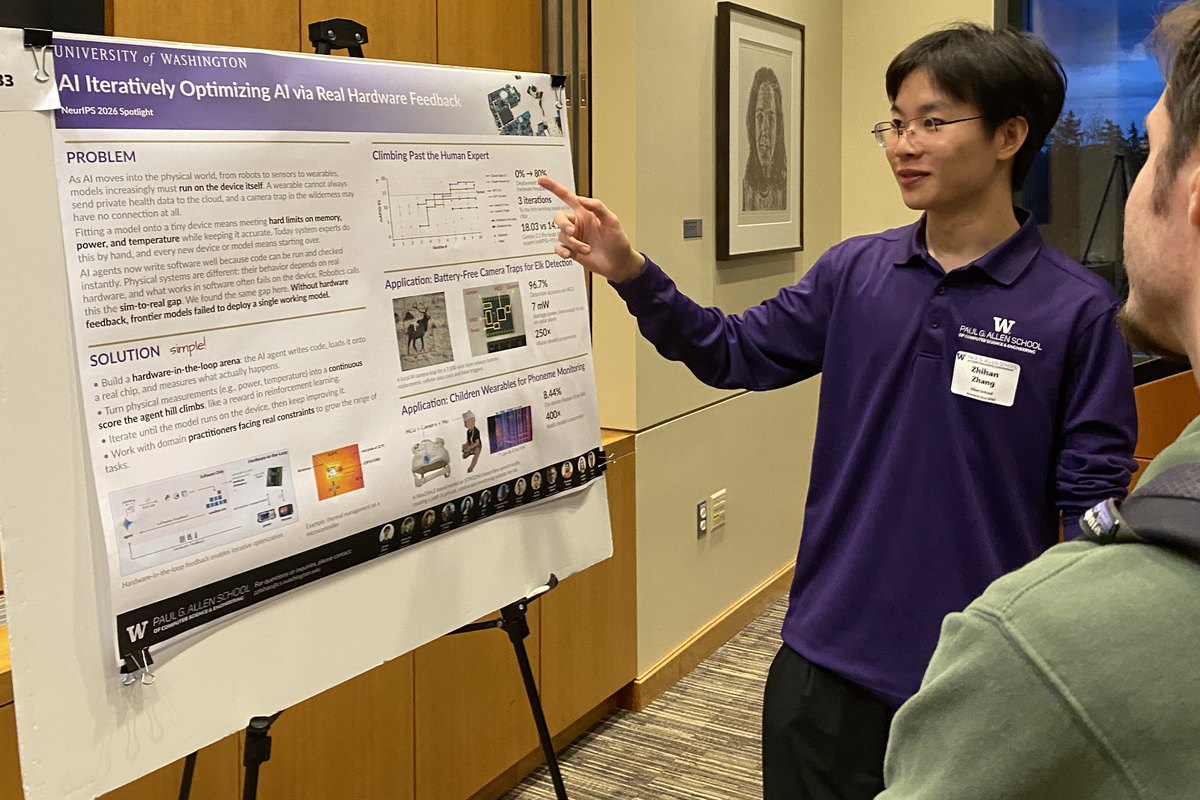
Today, small devices like health wearables often need to run AI inference directly on the device due to latency, poor connectivity, or privacy concerns. However, this is challenging because the model must stay accurate while fitting within the chip’s limits on memory, power, and heat. Historically, engineers had to do this optimization by hand.
The team found that leading AI models failed at the task on their own, but they achieved a breakthrough when giving the agent real hardware feedback. The system loads its work onto an actual device, measures the results, and tries again. With that loop in place, the agent outperformed human experts within seven rounds.
Next, the team tested their approach on two real-world scenarios: an elk-detection camera trap and a wearable that transcribes children’s speech for child development research. The agent results showed they can make a vision model 250 times smaller and an audio model 400 times smaller with little loss in accuracy. The team also released an open-source benchmark, Embedded Arena.
First Runner-Up
Tanush Yadav presented “VideoNet: Action Recognition in the VLM Era.” Collaborators were Mohammadreza Salehi, Jae Sung Park, Vivek Ramanujan, and Rohun Tripathi, along with Allen School faculty members Ali Farhadi, Hanna Hajishirzi, and Ranjay Krishna, and Yejin Choi, who is now at Stanford.
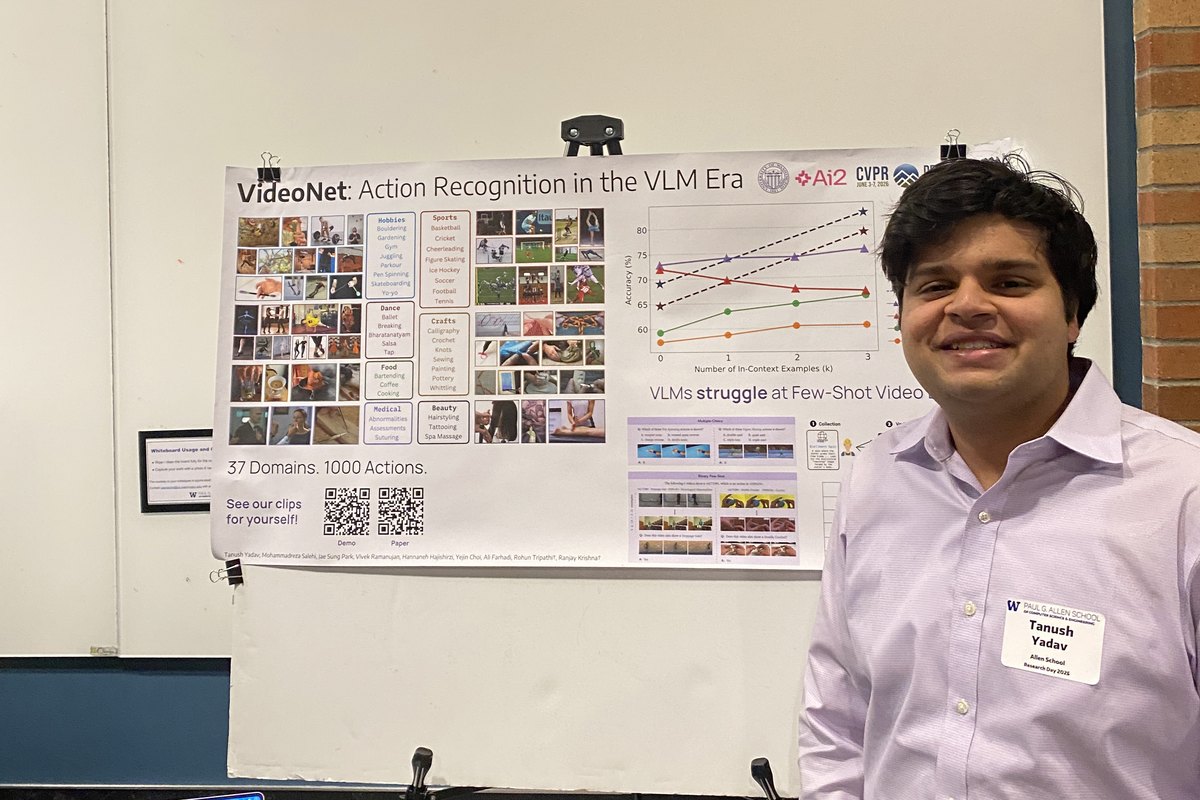
Today, vision-language models struggle to recognize specialized actions, such as moves in particular sports, crafts, or professions. This is because existing datasets aren’t diverse or challenging enough. The breakthrough was building VideoNet, a benchmark that tests whether models can recognize 1,000 specialized actions across 37 domains, along with a training set of nearly 500k video question-answer pairs, the first of its kind for domain-specific actions. With the new training data in place, Molmo2-4B, the small open model the team trained on it, outperformed every open-weight 8B model on VideoNet.
Second Runner-Up
Henry Wong presented “Secure Screening for DNA Hardware.” Allen School faculty member Jeff Nivala worked on the project, along with Tadayoshi Kohno, who was at the Allen School and is now at Georgetown University.
Benchtop DNA synthesizers let people print synthetic DNA, and they rely on screening software to block dangerous pathogens. Henry built a framework for secure hardware in benchtop synthesizers, focused on protecting the screener from tampering so the device fails when something goes wrong. His analysis shows that even perfectly secure hardware wouldn’t fully stop malicious synthesis, and hardware alone can’t solve the problem.
Audience Choice
Keisuke Kamahori won the audience award for “VibeSys: Self-Improving Bespoke Systems.” Shihang (Vic) Li and Allen School faculty members Simon Peter and Baris Kasikci also worked on the project.
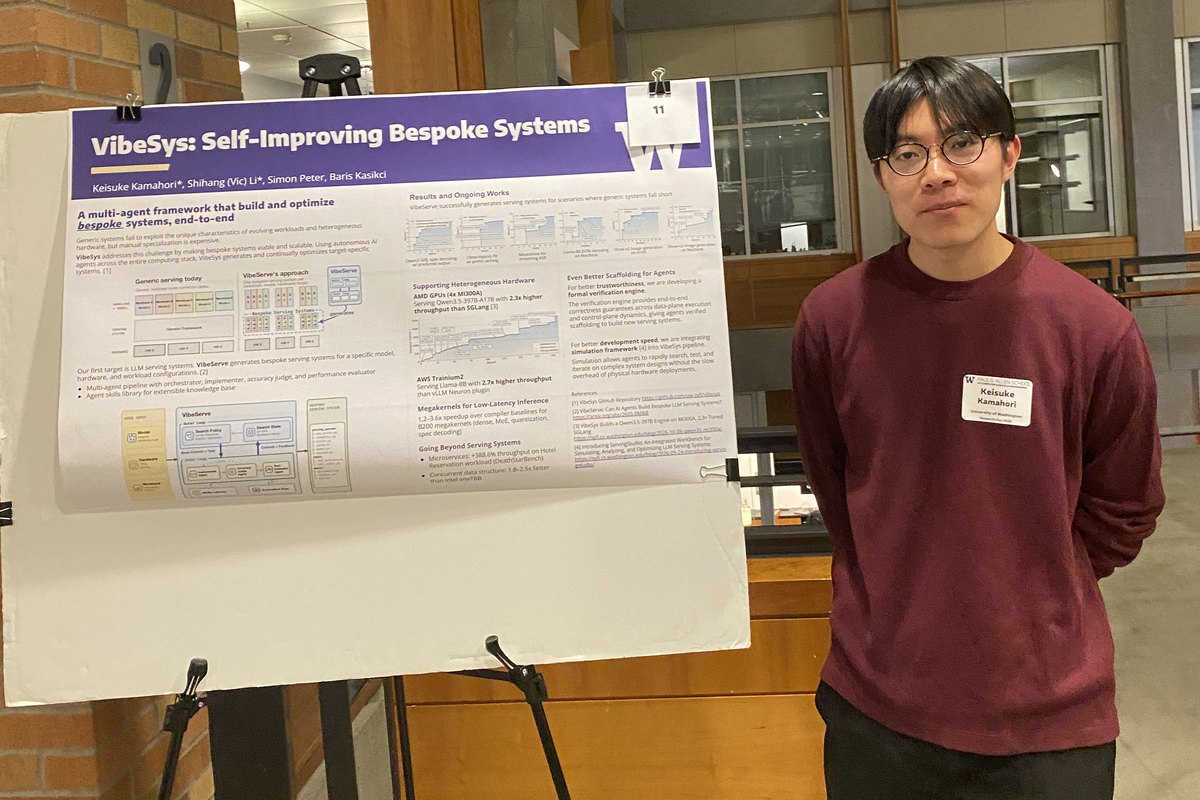
General-purpose computer systems often aren’t optimized for the specific workload or hardware they run on, and tailoring a system by hand is too costly to do at scale. To solve this, the team built VibeSys, a system where multiple AI agents automatically build and continuously improve custom software. Its first use, VibeServe, creates LLM serving systems tailored to a specific model, hardware, and workload. On Amazon’s Trainium2 chips, the software it built ran up to 2.7 times faster than an existing system.
Conclusion
The frontier of AI is moving from the cloud toward the physical world, and the open problems are moving with it. Two of these exciting projects tackle how to make AI run efficiently on specific chips, whether that’s a solar-powered camera in the backcountry or a cutting-edge accelerator in a data center. VideoNet exposes the gap between how models perceive real-world activity and how people do. And the DNA screening research warns that as automation moves into the laboratory, safeguards have to be built in from day one.
This transformation is also pushing researchers to build their own open benchmarks for these new fields, as seen by VideoNet and Embedded Arena. Benchmarks enable teams to demonstrate meaningful progress and give the wider community a shared method for comparing approaches. It’s a promising foundation for further research and for new companies to build on.
Madrona is proud to keep supporting the bridge between the Allen School and the PNW startup community. Our congratulations go to all four teams, every presenter an Allen School PhD student, and our thanks to the students, faculty, and collaborators behind the work.
Related Insights