The AI community is energized by building AI Systems (not just models) that can transform our world. With AI, technology has started doing the work itself, and every task an agent completes leaves behind a record of what worked and what didn’t. That record should make each system better than it was the day before. Yet most of the AI systems deployed today are not benefiting from continuous learning and improvement.
A recurring theme at our Annual IA40 Summit this fall was how to continually optimize an AI system after it ships. Many of the clues live in the harness, meaning the data, context, memory, model routing and feedback loops that complement the models and create improving AI systems. Today most harnesses are tuned by hand. Engineers adjust prompts and tool definitions, rerun evals and push a new version while the underlying models and the data keep shifting beneath them. Because model behavior is non-deterministic, reliability is continually earned, and that is way too hard to do for most teams!
Our belief is that no single model or system will rule them all. Companies will run many systems, each drawing on different models and tools while depending on context specific to an industry or domain. The people building those systems know their domain better than anyone else in the world, and want technology that builds upon that knowledge. Carlos Guestrin made a version of this case at the IA40 Summit, arguing that intelligence shouldn’t be controlled by one or two model companies and that every company should be able to build and own its own AI systems. For a team building legal agents or a bank running its own research tools, that means an AI system that gets better at their specific work from their own data, without waiting on the next release from a frontier lab.
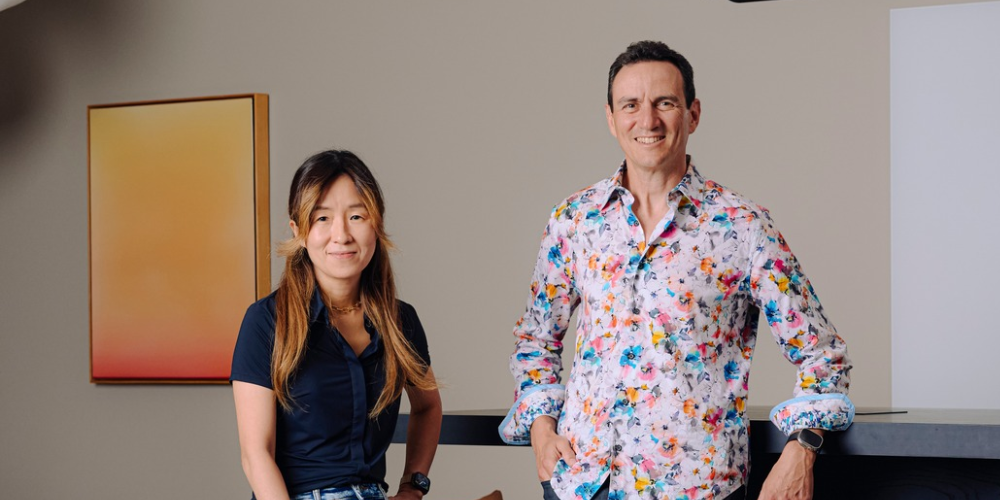
That is the problem Carlos and his co-founder and co-CEO Yejin Choi started Noeri to solve, and today we’re announcing our investment in the company’s $110M fundraise led by our friends at Menlo Ventures, with participation from Kindred Ventures, Wing Venture Capital and NEA, as well as strategic investors Cisco Investments, NVIDIA, and Snowflake.
Noeri is building a continuously improving harness for agentic systems. It takes the data a deployed system already produces, including application logs, tool calls and verifier results, and uses it to keep optimizing that system toward the business or scientific goals its builders define. The approach combines test-time training, which lets a model keep updating on the specific problem in front of it, with synthetic data to cover edge cases that rarely show up in production and self-distillation, in which a model improves by learning from a better-informed version of itself.
Carlos, Yejin and their students have helped advance each of these techniques, and the research is already showing up in how leading teams build. When Cursor released Composer 2.5 in May, it listed Reinforcement Learning via Self-Distillation, a paper Carlos and other Noeri founders co-authored, among the work behind the model’s new training method. In January, a Stanford and NVIDIA team that included Yejin and Carlos published Learning to Discover at Test Time, a method that keeps training a model on a single hard problem while it works on it. Using an open model at a cost of a few hundred dollars per problem, it set new state-of-the-art results on most of the problems it attempted across mathematics, GPU kernel engineering, algorithm design and biology. Its GPU kernels ran up to twice as fast as the previous best in a public competition.
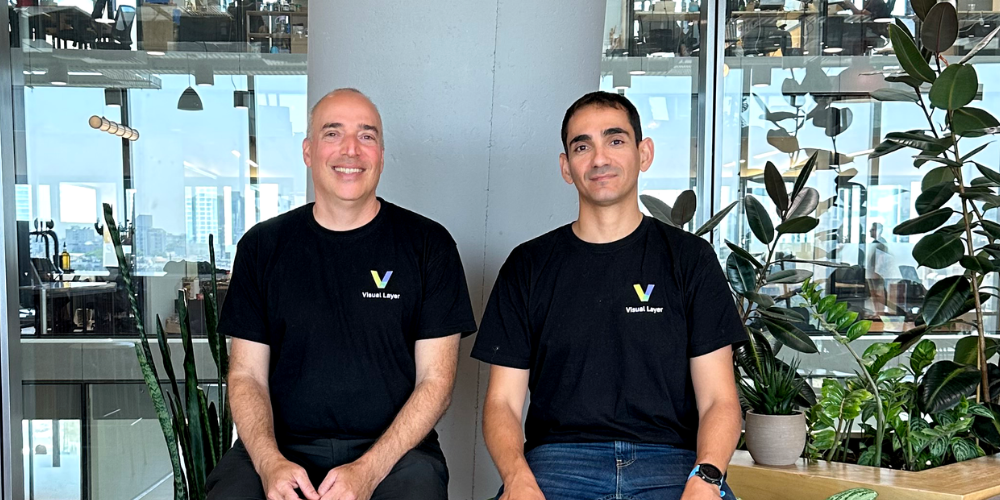
I first met Carlos in 2012, when he came to the University of Washington from CMU as the Amazon Professor of Machine Learning. I could tell from that first meeting that he was a tremendous talent, exceptionally strong at research and a natural talent at commercialization. The next year we led the seed round for GraphLab, which became Turi. Turi was an early leader embedding machine learning in applications, giving developers and data scientists the tools to build intelligent applications years before most companies were ready for them. Apple acquired Turi in 2016. Carlos went on to serve as senior director of machine learning and AI at Apple before returning to research at Stanford, where he now directs the Stanford AI Lab, and we partnered with him again in 2023 when we co-led the seed round of Visual Layer.
I also met Yejin at UW many years ago, when she was leading research on commonsense reasoning there and at the Allen Institute for AI. That work earned her a MacArthur Fellowship, and nucleus sampling, which she co-developed, is now the top-p setting developers adjust in most major language model APIs. She has since served as a senior director at NVIDIA and joined Stanford’s faculty, where her lab has focused on getting smaller models to reason as well as much larger ones through better training and inference. Her depth on how models reason, alongside Carlos’s career in large-scale systems optimization, is the combination this problem calls for, and as co-CEOs they make an energizing pair.
With graduate students from their labs at UW and Stanford, and engineers who worked alongside Carlos at Turi and Apple, they’ve assembled a dream team. Talent for this kind of work is as contested as it has ever been, with frontier labs and the largest technology companies recruiting the same people. A team with research credentials this deep, a track record of building and selling a company, and the ability to attract top-decile talent in that market is rare, and it’s a big part of why we wanted to work with Carlos and Yejin in this deep way again.
Coding was the first place this kind of in-production improvement took hold, because code comes with structure and tests that tell a system when it got something right or not. Carlos and Yejin see the pattern extending to any domain where outcomes can be verified, from enterprise workflows to scientific research. Fourteen years after that first meeting with Carlos, we’re looking forward to rolling up our sleeves with him, Yejin and the whole Noeri team to build a company that helps others continuously improve their AI systems while always improving themselves!
Related Insights